The year is 1998. I’m sitting in my Grade 11 computer science class learning how to search the internet.
It’s complicated.
Our teacher is showing us how to string together keywords using AND, OR, plus signs, quotation marks, and all sorts of other symbols. Basically, the early version of prompt engineering.
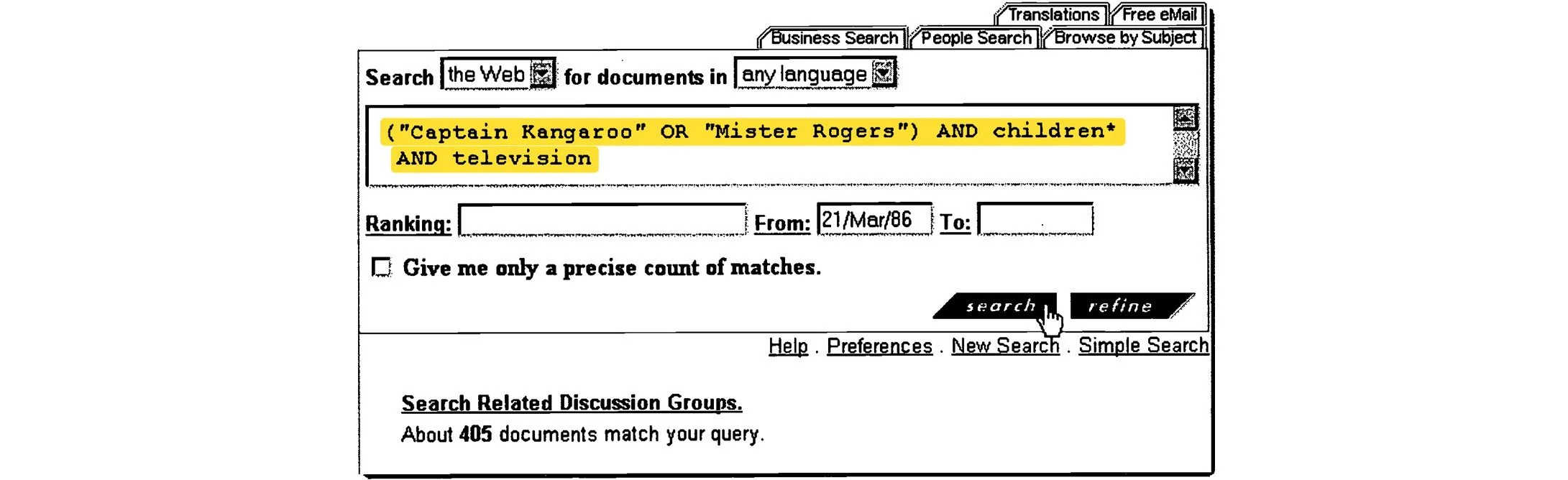
Here's a sample search using AltaVista's Advanced Search Mode.
All I want to do is find out about the latest Nintendo 64 game. After carefully constructing my search query, I hit enter.
And wait. Slowly, painfully, the page starts loading.
What a time to be alive.
Fast forward a few years. Nobody needs to learn special search syntax anymore. You just type what you want into a search bar. Spelling mistakes and all. The technology evolved. What once required specialized knowledge became something practically anyone could do.
Sound familiar?
When New Technology Becomes a Commodity
Remember when prompt engineering was supposed to be the next hot career? That was, what, three years ago?
Now you can literally talk to AI. No special syntax. No elaborate prompts. Just tell it what you want, spelling mistakes and all. We’re watching the same cycle repeat itself, only much faster.
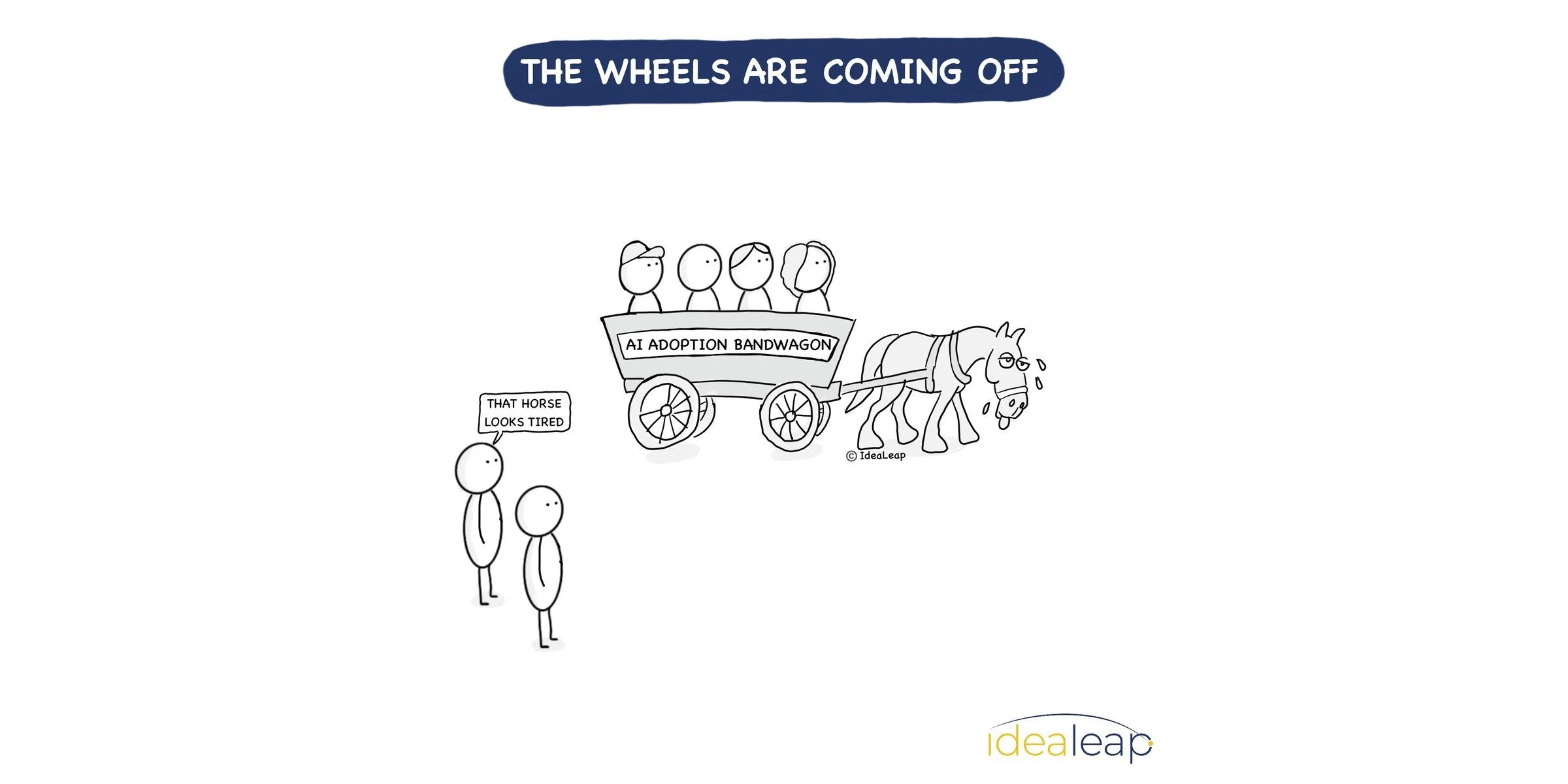
Which brings me to the change management industry’s obsession with AI adoption. For the life of me, I don’t understand it.
Everywhere I look, there’s another AI adoption framework, AI change management certification, AI readiness assessment, or someone explaining why AI requires an entirely new approach to change.
What happens to all these AI adoption frameworks when AI becomes as ordinary as searching Google or using a smartphone? When it becomes a commodity? Because that’s where we’re heading.
AI is already being embedded into practically everything. It’s rapidly becoming a commodity rather than a specialized technology. And yet, here we are, building an entire industry around its adoption.
Does AI really pose fundamentally different change management challenges?
People need access to the technology. They need to understand what it means for their work. They have hopes. They have fears. There are organizational constraints, competing priorities, leadership challenges, budgets, incentives, and friction.
Sound familiar?
Of course, the technology is different. The context is different.
But the fundamental challenges of organizational change? Not really.
Here’s what I predict will happen next. Despite all these shiny new AI adoption frameworks, the change management industry will struggle to deliver meaningful impact. Not because AI is particularly difficult to adopt, but because we’re approaching it with the same assumptions we’ve always had.
Create awareness. Build desire. Develop capabilities. Deliver training. Reinforce behaviours. The same old playbook, now with AI sprinkled on top.
Inevitably, when the expected results don’t materialize, we’ll blame leadership for not being engaged enough. We’ll blame employees for resisting. We’ll blame the organization for not following our carefully constructed change management advice.
Anything but question whether the advice itself was wrong.
The fundamental problem is that we continue to treat organizational change primarily as an individual challenge. As though changing enough individual minds will somehow produce the organizational outcomes we’re looking for.
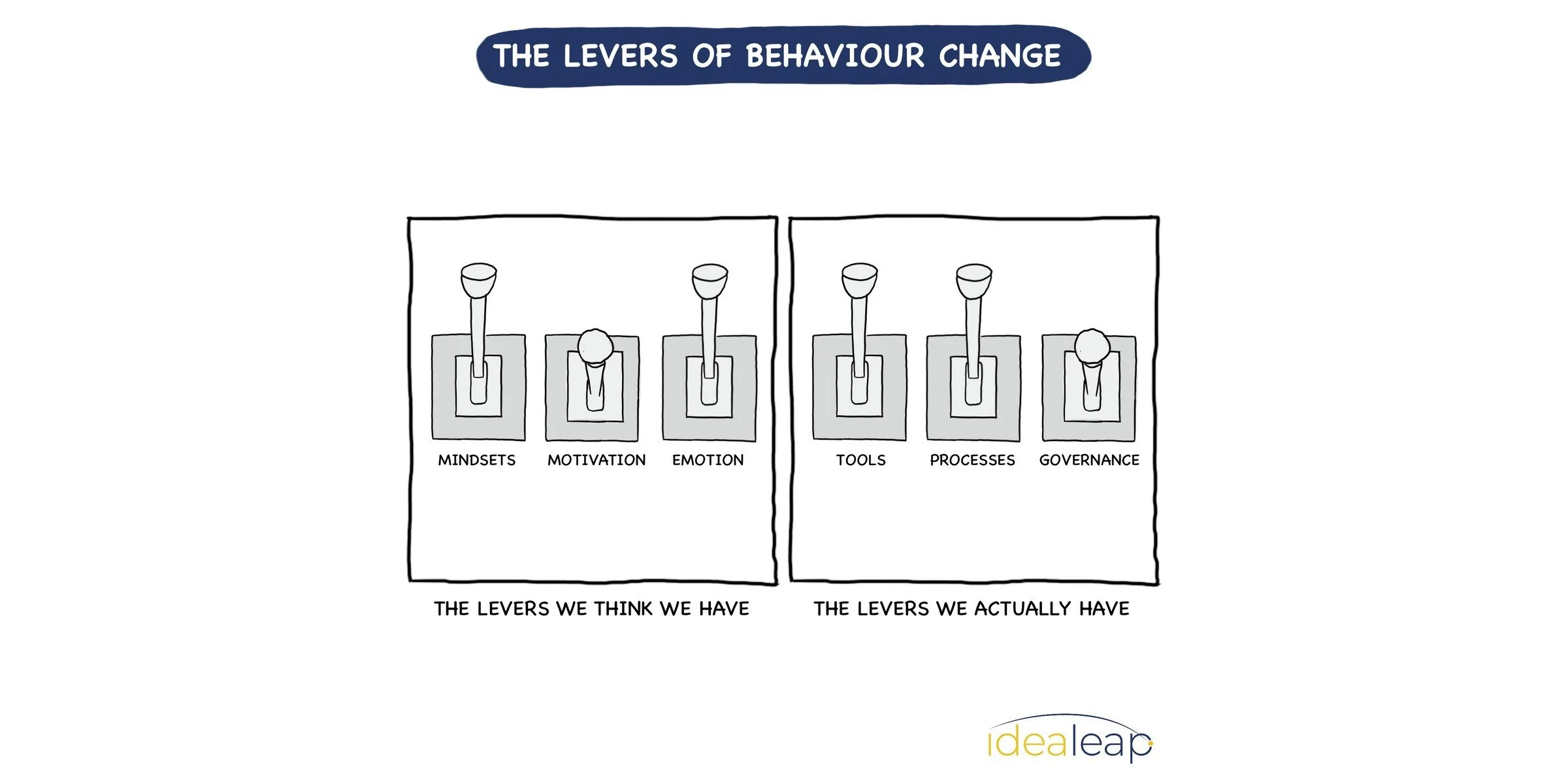
But behaviour doesn’t happen in isolation. It emerges from the conditions people operate within. The structures, processes, incentives, relationships, expectations, and constraints that shape what people actually do.
If we want different behaviours to emerge, we need to change those conditions. Make the behaviours we want easier. Make the behaviours we don’t want harder.
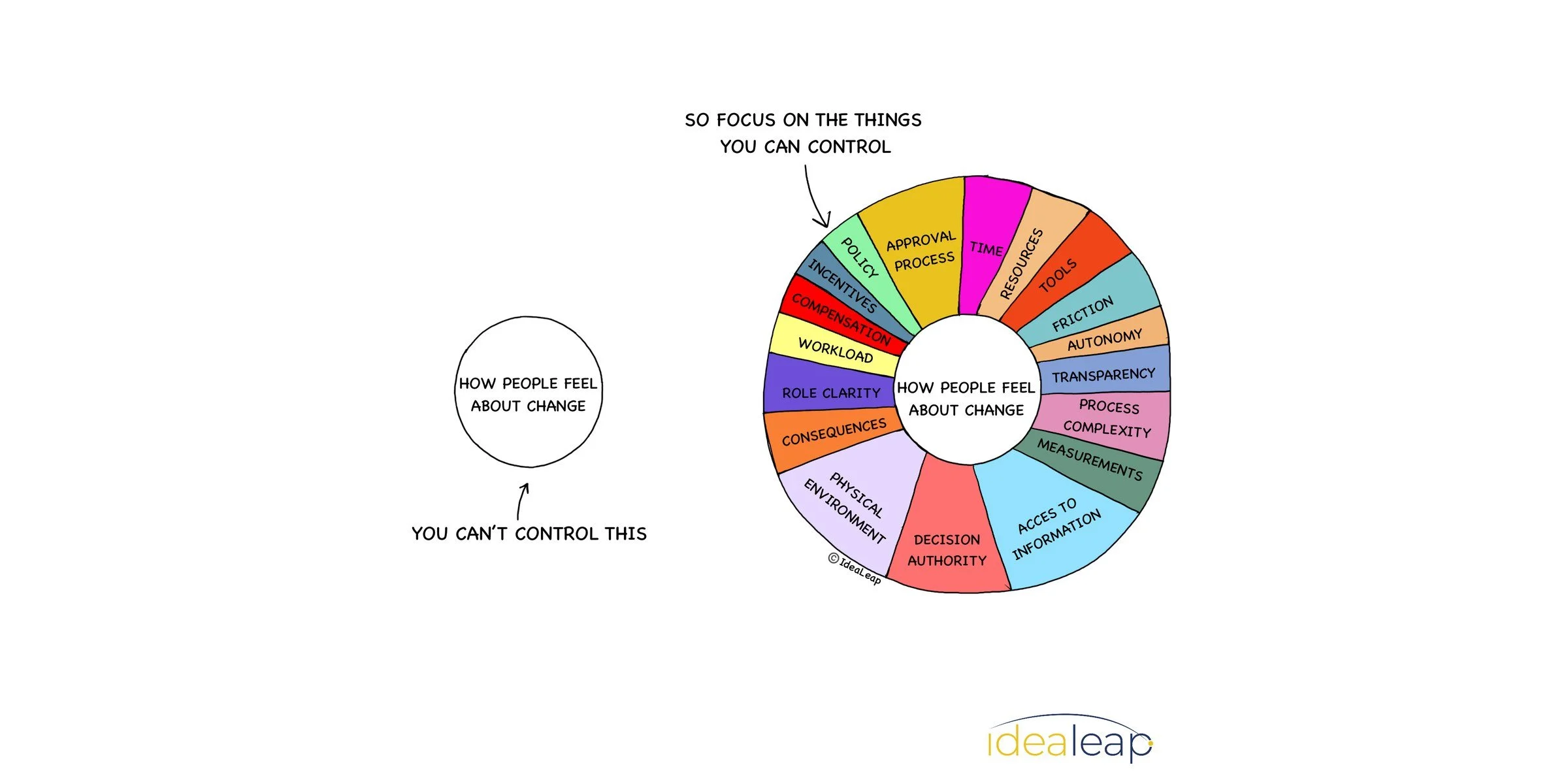
Experiment with constraints. Observe what happens. Adjust.
This isn’t unique to AI adoption. It’s how we should be approaching change in social systems, regardless of the technology involved.
Yet here we are, doubling down on our obsession with the individual. Only this time, we’ve got AI adoption certifications to prove we know what we’re doing.
Some of the AI adoption frameworks are starting to discover that change is emergent. That it doesn’t necessarily have a defined beginning, middle, and end. That organizations need to continuously adapt as circumstances evolve.
Welcome to the party.
This is what Lean Change has been built upon from the beginning. Even when we’re supporting project-based changes with defined start and end dates, organizational change doesn’t follow our artificial timelines.
Social systems don’t care about your project milestones. People interact, interpret, adapt, resist, experiment, and respond to one another. The context is constantly evolving.
That’s why Lean Change has always emphasized continuously generating insights about the current context, exploring options for intervention, and running small, time-bound experiments to see what happens.
Insights → Options → Experiments.
Repeat.
Not because AI has arrived. Because that’s how change happens in social systems.
And yes, the pace of change is accelerating. Information moves faster. Technology evolves faster. Organizations are having to respond faster. But none of that changes the underlying nature of organizational change.
The technology changes. The context changes. The pace changes.
But the way change happens in social systems hasn’t suddenly changed because someone invented ChatGPT.
The great challenge for change management in the 21st century isn’t with AI. It’s in understanding the fundamental premise around how change actually happens.